A Beautiful Moment Between an Elephant and Her Baby
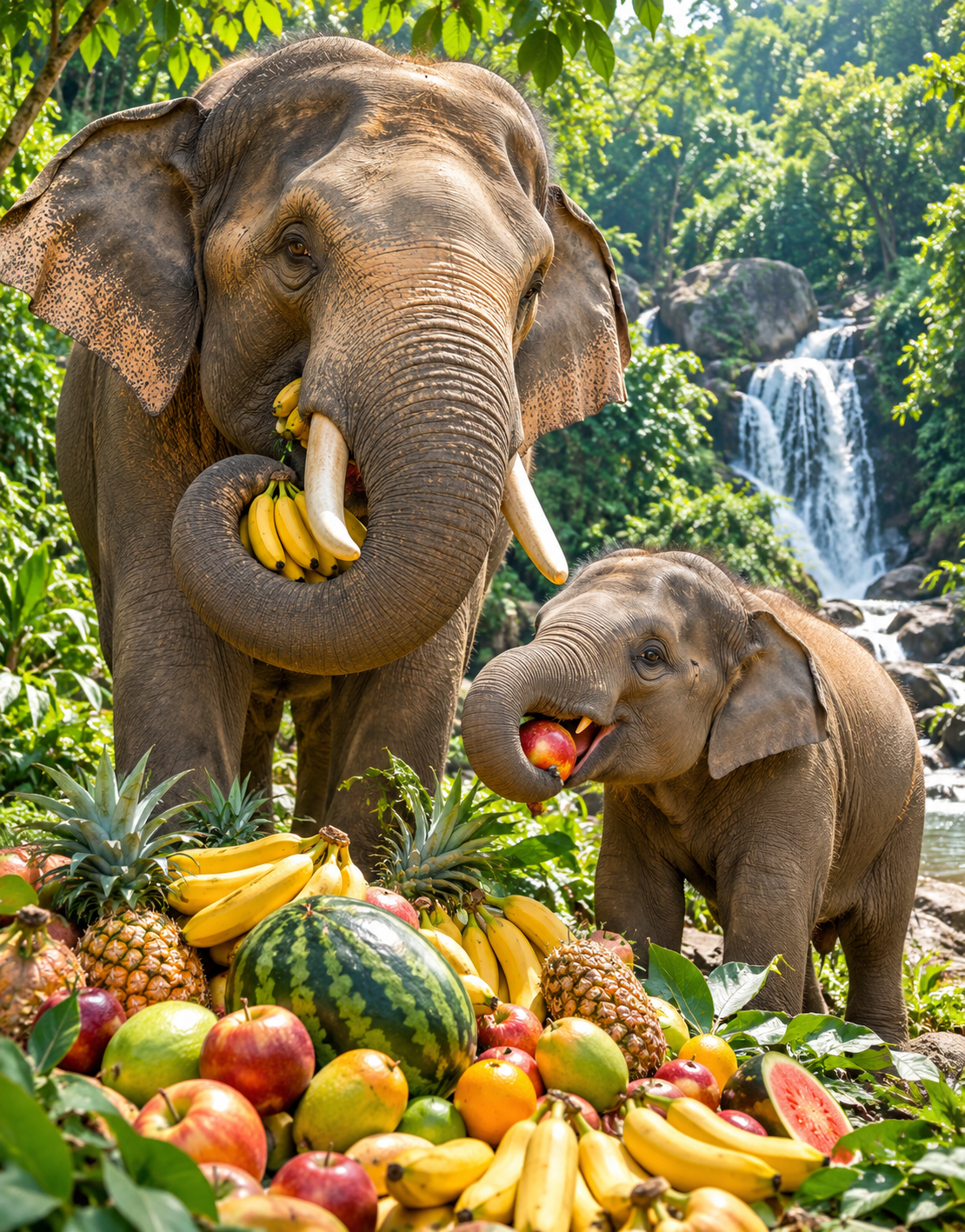
Deep inside a lush green jungle, a beautiful scene unfolds between an elephant and her young calf. Surrounded by trees, fresh vegetation, and colorful fruits, the two elephants appear to enjoy a peaceful moment together in their natural environment.
The image captures something that makes elephants so fascinating: their strong family bonds and gentle social behavior.
A Mother and Her Calf
Elephants are highly social animals, and young calves spend many years learning from the adults in their family group. A young elephant depends heavily on its mother and other members of the herd for protection, guidance, and learning.
The calf gradually learns how to find food, communicate with other elephants, and move safely through its surroundings. Everyday activities can become important learning experiences for a young elephant.
Why Elephants Love Vegetation and Fruits
Elephants are herbivores, meaning their diet consists entirely of plant-based foods. Depending on their habitat and season, they may eat grasses, leaves, bark, roots, branches, flowers, and different types of fruit.
An adult elephant can consume a very large amount of vegetation in a single day. Their powerful trunks help them collect food and bring it directly to their mouths.
For a young calf, feeding is also part of learning. By watching older elephants, calves gradually discover what foods are available and how to handle them.
The Special Bond of Elephant Families
One of the most remarkable things about elephants is their complex social structure. Female elephants and their young commonly live in family groups, while older females often play important roles in guiding the herd.
Calves are not raised by their mothers alone. Other females in the group may also help protect and care for young elephants. This cooperative behavior gives calves additional opportunities to learn and remain safe.
A Peaceful Scene in the Jungle
The surrounding jungle provides more than just food. Forest ecosystems offer elephants shelter, water, shade, and places where they can travel and socialize.
In the image, the elephant and calf are surrounded by lush vegetation and fresh fruit, creating a peaceful picture of wildlife living close to nature. Although the image is a visual representation rather than a documented wildlife photograph, it highlights the beauty of elephants and their natural way of life.
Why Protecting Elephants Matters
Elephants play an important role in many ecosystems. As they move through forests, they can influence vegetation and help disperse seeds through their dung. Their movement can also create pathways that are used by other animals.
However, wild elephants face threats in many parts of the world, including habitat loss, human-wildlife conflict, and illegal hunting. Protecting forests and maintaining safe wildlife corridors are important steps toward helping elephant populations survive.
A Reminder From Nature
The simple scene of an elephant and her calf sharing food reminds us that wildlife is not only about strength and survival. It is also about family, learning, cooperation, and connection.
Every young elephant begins life by learning from those around it. Protecting the forests where these animals live means protecting not only individual elephants, but entire generations of wildlife.
Nature’s most beautiful moments are often the simplest ones—a mother, her baby, and a peaceful meal beneath the trees. 🐘🌿❤️
